What Facebook Really Knows

Living in such a digital world I think I have always been aware that every time I am online, specifically on social media platforms, what I like, view and post is being heavily monitored and stored by the platform itself. However, looking at the information that’s gathered and knowing what I interact with directly on Facebook, and what is coming from external sites it is clear that I have a lot less privacy online than I thought I did.

Image: Facebook

When I downloaded the information, Facebook had about me the first section that I found really confronting was the list of my “off Facebook activity.” In the past I have questioned how some of the ads I was being shown on my feed were so relevant to my interests. As a result of the introduction of so many new platforms Facebook is no longer the main social media platform I use, however I assumed that because they own other platforms such as Instagram a lot of their data on me would come from there. I also have always been aware that every time I’m online websites are collecting information on me so they can cater their ads and content to my interests, however, I did not realize the extent to which Facebook does this.

When first reading through the websites it showed I have used I thought that they may be sites that I went on through clicking a Facebook link but then noticed that some of the apps I used on my phone were also on the list. It was also really alarming to realize that Facebook were going beyond just seeing what I was searching up online, they also were tracking when I played games on my computer that did not require internet connection like “The Sims” and also every time I opened an app on my phone, even if it wasn’t one that displayed ads or was linked to my social media accounts.

Image: Venture Beat
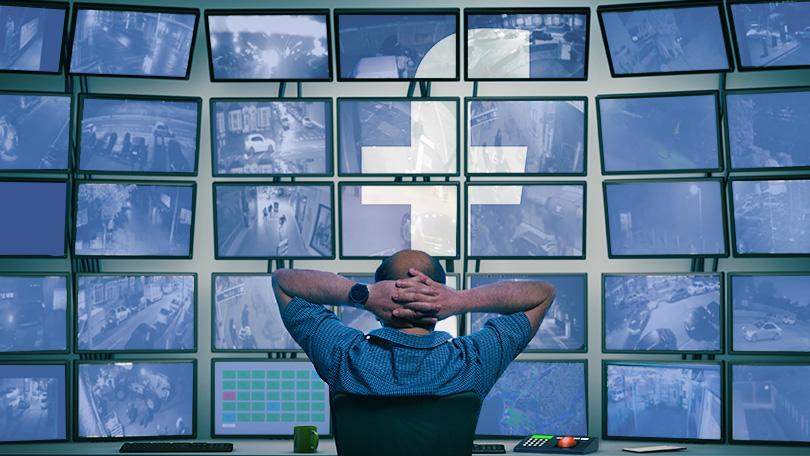
I understand that there is a huge economic incentive behind doing this, as my data can be sold online to companies that I would potentially want to buy from, however the extent to which this data is being collected feels like a huge invasion of privacy. It appears Facebook knows exactly what I am doing on any device that I own at all times which is really alarming.

Image: PC Mag

I think this is especially the case in terms of apps, because I had always thought if the app wasn’t connected to Facebook and I hadn’t given it permission to access my information there was no way for Facebook to be collecting information about me from it. I also have no idea how I would go about changing my settings, so this data wasn’t being collected

Overall, it has become clear to me that Facebook are collecting a lot more data from their users than what people are aware of. This is something that should be a lot clearer both when signing up for the platform but also in privacy settings. Even though it may be mentioned in the terms and conditions, there is no clear expression of data collection on the platform. After seeing the information, they have gathered from me it feels as though I have no privacy when using my phone or computer. 

Image: Towards Data Science

Featured Image: PYMNTS

Quarantine Media Consumption

I’ve noticed that since social isolation has begun time I spend on my phone on a day to day basis has significantly increased. I think a big factor in this is that I am trying to stay as informed as I can on the coronavirus situation, but also that I have so much time to kill during the day that I find myself scrolling through my phone for something to do.

According to my Screen Time app, I have been spending 8 hours a day on my phone lately. This is 9% more than normal times.

Image: Family Connections

The social media apps I have been using most are:

#1 TikTok – 2 hours per day

#2 Twitter – 1 hour and 30 minutes per day

Image: Icon Ninja

Most of my news has been coming from platforms such as Twitter and Facebook. I have found that through accessing news through social media platforms, rather than directly going to one news site everyday, I have been able to gain more perspective on different ways the virus has affected the world, in terms of economics, infection rates, medical advancements, people’s livelihoods and global lockdowns.

Image: Visteo

There have been multiple articles that have stood out to me since I have come back to Australia in regards to responses to self-isolation. A few days after I returned home, ABC News posted a story that made headlines globally about hundreds of people flooding Bondi Beach in Sydney on a hot day, despite being told to practice social distancing.

Image: ABC News

Seeing the images of people sitting on the beach in close proximity to one another and acting as though it was a normal day was something that really frustrated me. The lifeguards working on the beach that day said it “was one of the busiest days I’ve ever seen, and it was a cause for concern.”

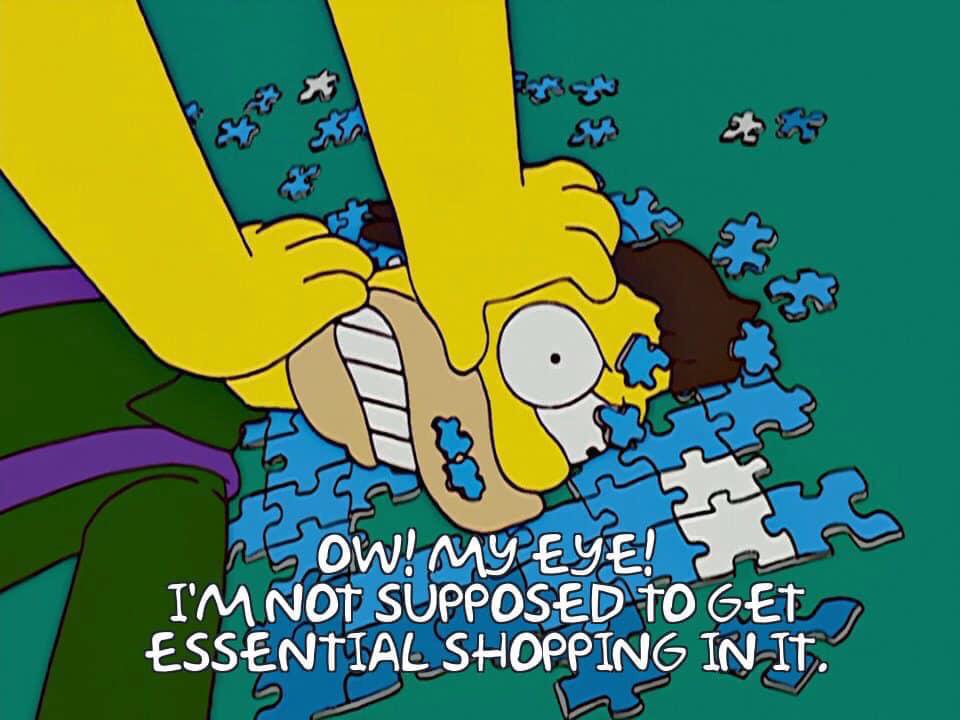
In response, Scott Morrison began putting in stricter rules surrounding social distancing; however his approach has not been successful in expressing the gravity of the situation to the Australian public. Earlier this week Morrison announced that no gatherings of more than 2 people could occur in a public space, and that people were only able to leave home to purchase essential items. At the start of the press conference it appeared as though he was taking a more serious, and much needed approach to social isolation. However, when giving an example of leaving home for essentials Morrison explained that his wife had gone out to buy his kids “a whole bunch of jigsaw puzzles.”

Image: Reddit

 Seeing statements like this made by the person who is in control of the country is frustrating because it feels like the situation is being taken much more lightly than it should be.

As the situation worsens, I’ve found myself spending more time on apps such as TikTok where I’ve been able to see people’s opinions on the situation in a more comedic or light hearted setting.

My younger sister has been making TikToks a lot since we began self isolating, and recently made one that mimics the way a lot of celebrities have responded to the pandemic. Although there are many public figures who have donated money and resources to helping the corona virus situation, there have also been instances of celebrities sitting at home with limited concerns about money, explaining how difficult social isolation has been from them. I think seeing a TikTok about it sparked conversation about how many people are being seriously affected by the pandemic whilst others are taking their wealth for granted, but also allowed it to be done in a much more lighthearted way than if it was posted in a twitter rant.

Overall, I think the way I am consuming media at the moment is very different to how I have in the past. I’ve become much more aware of what apps I’m going to, depending on if I am looking for news updates or more comedic content. I think for me at a time like this, balance is really important, because I know if I surround myself with a constant stream of news about case numbers and death rates, I am only going to end up more scared and overwhelmed by the situation.


Featured Image: Media Marketing

Football Team or Family?

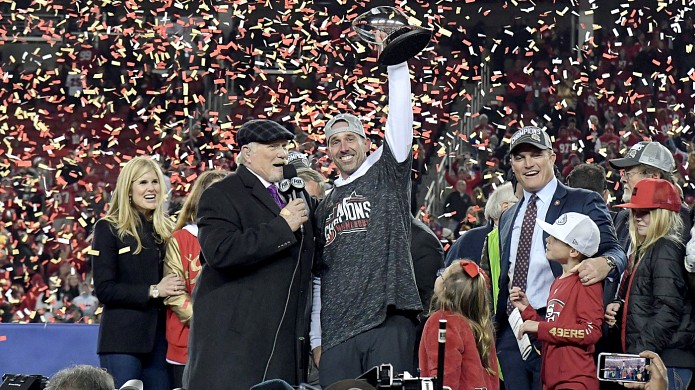
Kyle Shanahan receives George Halas Trophy

Grant Gordons article for the NFL; “These Niners look a lot like ’94 Super Bowl champs” clearly strives to portray the image that American football teams are a tight knit group of dedicated individuals, which often results in positions being passed down through family members. Although it is an incredibly reliable source in terms of football, it portrays teams in a way that may not be completely accurate to the reality of football and its history.

Image: 49ers Webzone

Throughout the article, the NFL does not make reference to any external sources, only using information provided from other NFL articles, interviews and player statistics recorded on their own site. Although in some circumstances it would be a cause for concern if an article was to only reference their own website, this is not the case with the NFL. As a result of this being the official site of the National Football league, this is an area where they have incredibly strong expertise.

The strong relationship that the NFL has with players is emphasised in quotes from an interview with quarterback Jimmy Garoppolo “I love that we keep it in the family and everything.” Not only does this establish credibility for the NFL as they are able to provide direct quotes from an interview conducted with a player, conveying that they have an incredibly high proximity with the source, it also allows for them to emphasize the idea of the 49ers as a close knit community.

Image : Kron 4

Through the direct quotations it becomes very clear that motivation of the article is to portray the close relationship and pride that players have for their teams. Garoppolo continues on to say that “When those older players come back, just whether they talk to us or you just see them on the sidelines, having them around, it’s cool. It just makes you realize the history of this organization and whenever you get that opportunity, it’s great.” However, the article completely disregards many significant events in the history of the NFL, instead only drawing the attention of fans towards the positive aspects.

It is clear that the writer of the article is playing on the emotions of the readers, and that it is most likely targeted at 49ers fans. Throughout the piece not only is a family like image portrayed through the language used in interviews, but also by descriptive language of the events taking place. The moment that a father, Mike Shanahan, handed the George Halas trophy to his son Kyle is described by Gordon as “tender.” He then goes on to explain that when the trophy was handed over “the father went for a high-five, but the son went right past it and hugged his dad.” This provides a visual of a well united team, that would stand together no matter what, however this is not the reality of the situation.

Image: Essence

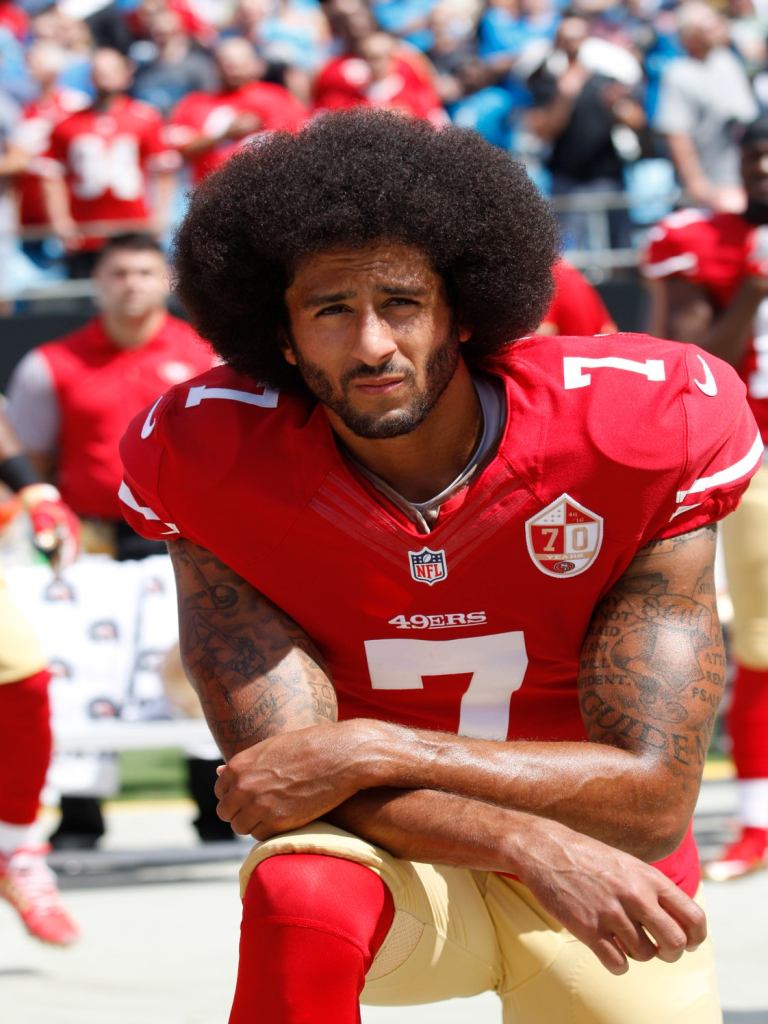
Although the NFL as an organisation does not show any bias towards a particular team, it is clear that their representation of football intends to show a very specific viewpoint. No bias is shown towards any team in particular, but instead the overall ideas surrounding football. No critiques or negatives about the games and team interactions, it specifically leaves out the controversy surrounding Colin Kaepernick’s departure from the team after kneeling in protest during the national anthem, taking a stance against police brutality. It is evident that the article aims to create a sense of community, and it is likely that this is done to bring both the fans and the team together as they prepared for the Superbowl, where Kaepernick’s absence would be felt.

Overall, although the article is accurate in terms of sources and evidence used, it is clearly portraying an idealistic view of football. As a result it leaves out any negatives about the team or relationships amongst players, however this is a result of where the article was published and the image of football they are portraying.

Featured Image: Sports Illustrated

Social Media as Procrastination

From looking at how I consume media in a 24 hour period I noticed that a lot of my time online is a result of procrastination and boredom. Social media allows me to justify to myself having short breaks, because it is so easy to watch a quick YouTube video or scroll through my Instagram feed whilst I’m doing work.

Image: Influencive

When I wake up in the morning, I immediately reach for my phone to check message notifications and a variety of social media platforms to see what I have missed overnight, whilst watching newly uploaded youtube videos. Although I always set myself a time that I have to get out of bed and start my day, I find myself procrastinating something as little as getting up because I have so much I can sit and do on my phone before I have to think about all the things I need to get done before I have class. I noticed throughout the day, when I am at class or with friends my media consumption decreases significantly, but spikes again when I get back to my room and start attempting to do homework. I think this is a result of being so used to instant gratification, that it has become harder for me to sit and focus on one thing for an extended period of time.

Although in some ways media consumption has a negative impact on my life, living so far from home there are many positives. Being able to use applications such as Facebook messenger mean that I can instantly message friends and family from home without having to pay international texting rates. Things such as Facetime allow for me to video chat my family very easily on a regular basis which is a huge benefit.

Image: Space Odyssey

Logging my media consumption over a 24 hour period helped me recognize that a lot of my time online is simply me trying to avoid getting things done. This is something I am aware of and am trying to get better about.

Featured Image: Attitude Magazine